
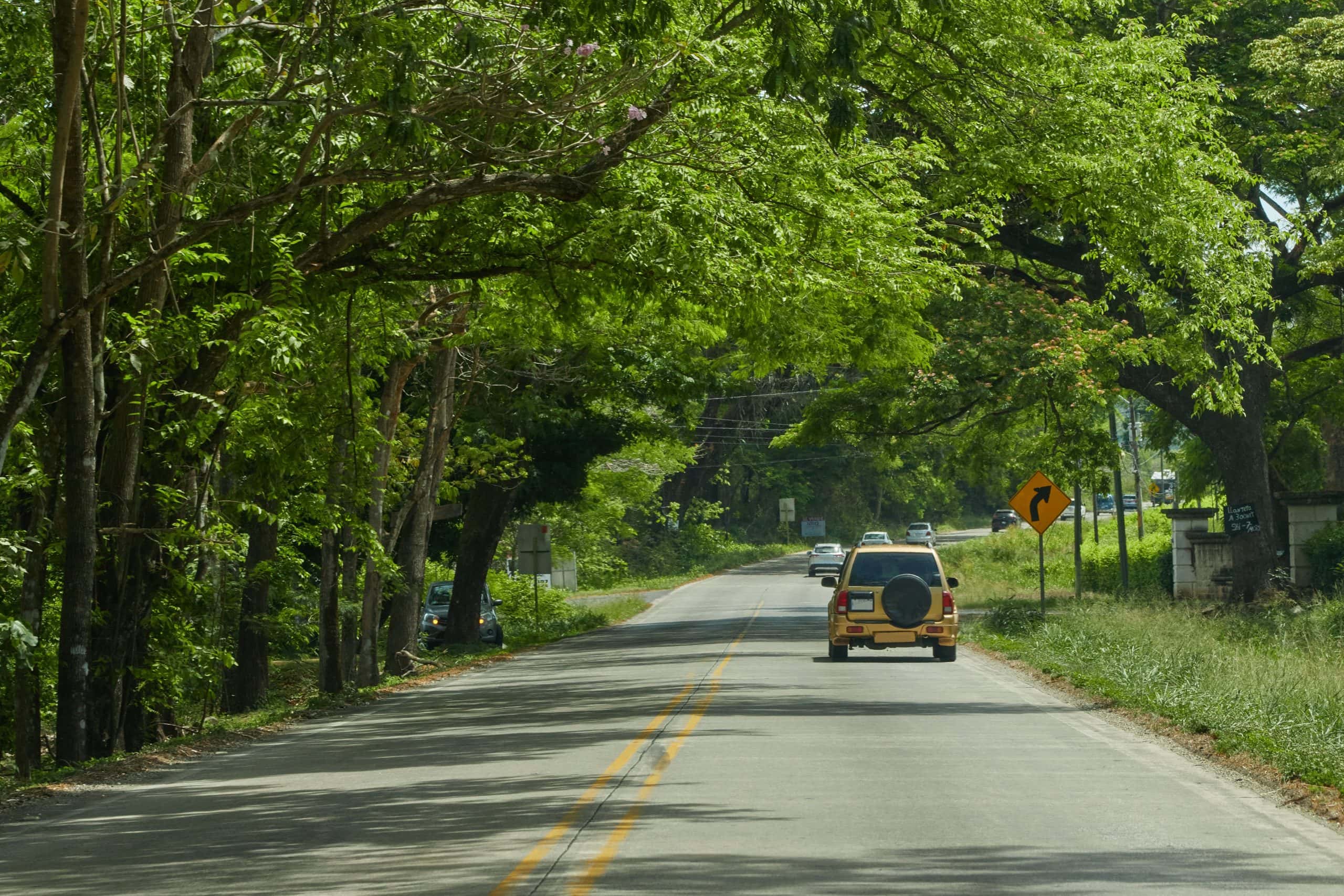
Driving in Costa Rica: Essential Tips & Best Transport Alternatives

Driving in Costa Rica is Not for the Faint of Heart. We’ll Tell You Why Plus Give You The Pros, Cons and Top Alternatives!
Costa Rica has become an increasingly popular destination over the years for good reason. Whether you’re a solo traveler, family or couple there’s so much to see and do for pretty much anyone.
Top tourist destinations in Costa Rica are far apart. Because of this, many people opt to rent a car if they plan to visit multiple areas. Is it a good idea? Unfortunately, there’s no straight answer to that question so we’re going to run through some helpful tips about driving in Costa Rica.
Why You Can Trust Our Driving Tips
We’ve been traveling to Costa Rica frequently for the last 32 years so we’ve seen and done pretty much everything including using different forms of transportation.
Our preferred methods for getting around Costa Rica include renting a car, shared shuttles and private transfers. We’re going to give you our honest opinion about the best transportation options so if you don’t see it mentioned here, it’s because we don’t recommend it.
Plan Your Trip With Our Favorite Resources
– Best accommodation site: Booking.com
– Book day tours here: Viator.com
Long Story Short
If you’re short on time, here are some quick answers to common questions about driving in Costa Rica.
- Can you drive in Costa Rica with a U.S. driver’s license?
Yes, you can drive in Costa Rica with a U.S. driver’s license. - Do I need a 4×4 vehicle?
Yes, you should get a 4×4 if you’re visiting the mountainous areas and rainforests further inland, especially during the rainy season. - Is driving in Costa Rica safe?
It can be safe with defensive driving, proper preparation, precautions and awareness. - Is car insurance required? Yes, Liability Protection Insurance and Loss and Damage Coverage are both required.
- What’s the best navigation option?
Waze is the most popular (even with locals) for real-time traffic and road updates. - Can I get around without renting a car?
Absolutely – shuttles, private transfers, domestic flights, and tours with transportation included are all viable options.

Costa Rica Airports Guide 2025: Which Airport to Fly Into & Why
Costa Rica has a lot of airports so choosing the best one to fly into can be a bit confusing for some people. If this sounds like you, check out our Costa Rica Airports Guide!
READ MORE
Is It Worth Driving in Costa Rica?
Answering this question isn’t easy. We’re not going to tell you that you should rent a car otherwise you’ll be missing out on something or won’t experience the “real” Costa Rica. That’s simply not true.
We’ve been to Costa Rica plenty of times without renting a car and we loved every minute of it. Sometimes we just prefer a hassle-free vacation.
Other times, we wanted to spend more time exploring. These were the times that renting a car suited us best.
We’re going to start with a list of the pros and cons that we’ve encountered when renting a car along with a list of who we think would benefit from renting a car and who may want to consider alternative transportation.

Pros
- Flexibility – Renting a car gave us the freedom to be spontaneous. We preferred to not have a set schedule. If we saw a cute restaurant, we’d pull over. Simple.
- Can Explore At Your Own Pace – Renting a car gave us the ability to experience beautiful scenic drives on the way to our next destination even if it took a little longer. Shuttles take the shortest distance between two points. You can build stops into the private transfers but it’ll cost you.
- Can Visit Remote Places – We’ve been able to travel off-the-beaten-path to more remote and less touristy spots that we may not have seen otherwise.
- Can Be Cost Effective – When we’ve visited more than one location, we were traveling as a family of four so it was more cost effective than booking multiple shuttles or private transfers.
- Easier To Transport Gear -We’ve found that it’s easier to load and unload luggage and gear with a rental car. This is especially true if you’re staying in a vacation rental and need to transport groceries, luggage or golf clubs.
- Saves Time – Having a car saved us time when transferring between destinations since we didn’t need to make multiple stops like we would have with a shared shuttle. Although, private transfers also save time.
Cons
- Challenging Roads – Some of the roads were a bit challenging and narrow especially when traveling inland to the more mountainous areas.
- Can Be Expensive – If you’re traveling solo or as a couple, it can be more expensive than a shuttle after taking into account the cost of insurance.
- Parking Can Be Challenging– We found that some small towns don’t have many parking spaces so it can be challenging to find available parking especially in the peak season.
- Lack Of Street Signs – One of the things we found to be the most challenging about renting a car is that many streets don’t have street signs. We had navigation so we managed just fine but there were several times when we questioned the accuracy of the directions. Some streets just don’t look like streets at all.
Who Should Consider Renting A Car?
- Solo Travelers – A car will allow you the freedom and flexibility to create your own itinerary, move at your own pace and make last minute changes.
- Families or Groups – It will be more cost effective compared to multiple shuttles or private transfers and it will be easier to transport luggage, baby gear, etc.
- Anyone on a Tight Schedule – If you’re short on time, a car will help you to maximize your time.
- Visitors Staying in a Vacation Rental – You’ll usually need a car to get to the grocery store, restaurants or for day trips.
- Adventure Lovers – If you enjoy going off-the-beaten-track to find less touristy places, a car rental makes sense for you.
Who May Not Need To Rent A Car?
- Visitors Staying In One Place – If your plan is to stay at your resort and sit by the beach for a week, you may not need to rent a car. A shuttle or private transfer might make more sense.
- Nervous Drivers – If you don’t enjoy driving or it makes you nervous to drive in unfamiliar places, renting a car in Costa Rica probably isn’t the best place to try to get over your fears. The rough roads and lack of road signs can make driving challenging.
- Travelers On A Budget – The high rental prices and insurance costs can make a car rental expensive. If you’re working with a budget, shuttles may be the better option.
- Visitors That Want A Hassle-Free Vacation – If you would like a relaxing, stress-free vacation, you may want to consider alternate modes of transportation.
What to Know Before Renting a Car
Costa Rica is a country that’s meant to be explored. Whether it’s the many beach towns that dot the coastline or small towns further inland, there’s so many great places to discover.
However, before signing on the dotted line of that rental agreement, there’s a few things you may want to know first.

Do You Need an International Driver’s License?
An International Driving Permit (IDP) isn’t required unless your license is not in the Latin Alphabet. That being said, we always travel with one. It’s easy to get and doesn’t cost much so why not?
You will need to bring your regular driver’s license with you and it needs to be valid for the length of your stay.
If you’d like to get an IDP, be sure to go through the American Automobile Association (AAA). They’re the only authorized issuer of IDPs. You can obtain one in person or by mail for a $20 fee.
Rental Car Requirements and Tips
There are some age and rental requirements that you should be aware of before renting a car. Make sure to ask the car rental agent to clarify anything you don’t completely understand prior to signing the rental agreement. Here are a few of the things you should know.
Age Requirement
You usually need to be at least 21 years old to rent a car in Costa Rica. However, there are rental companies that require you to be older than 21. You’ll need to check with the individual car companies to see what their requirements are.
Some rental companies may charge a fee for driver’s under a certain age. This is pretty much true wherever you travel.
Insurance Policies
Each rental car company may have different policies regarding insurance coverage so be sure to fully understand the requirements prior to signing the agreement. Here are a few basic things you should know.
- Liability Protection Insurance – This is mandatory when renting a car. This is billed as a daily fee along with the rental fee (usually $15-$20/day). This insurance will give you limited liability protection coverage for damages and injuries should there be any incidents involving a third party.
- Loss and Damage Coverage – Usually referred to as LDW, you can either purchase this from the rental company as standard or extended coverage. You can also use the coverage provided by your credit card company.
- Make Sure You’re Covered – If you plan to decline the rental company’s LDW coverage, be sure the credit card you use does in fact offer coverage. You don’t want any surprises.

If you use your credit card LDW and you are involved in an accident, keep in mind you will likely need to pay for all damages up-front before leaving the country. You would then need to file a claim with your credit card company.
Local Road Conditions
Road conditions vary between locations and seasons. In the more populated areas, you’ll find well paved roads and more consistent signage. However, further inland, dirt and gravel roads are more common and you’ll find that street signs sometimes don’t exist.

Paved vs. Unpaved Roads
If you’re renting a car and plan to visit inland or mountainous areas, you’ll need to be prepared for varying road conditions.
The roads in and around the more populated and touristy areas are usually well-paved. There are instances when you’ll come across sections of unpaved road but nothing overly concerning.
As an example, we’ve stayed at the JW Marriott Guanacaste and the road that branches off the main one to get to the hotel is dirt and gravel. It’s a flat road which eventually turns into a paved one so a regular car would be fine.
Road Closures
It’s not uncommon for there to be road closures especially during the rainy season. Sometimes it’s due to flooding and sometimes portions of a mountain road get washed out.
On one of our visits, a road between Liberia Airport and La Fortuna was washed out due to heavy rain. This was in July. Luckily, we had opted for private transfers for this particular trip. Our driver was aware of the closure so he took an alternate route. It was a little longer but not by much.
If we had been driving ourselves, we probably would’ve had to backtrack which would’ve taken an extra hour or so. In addition, we would’ve had to navigate the narrow mountain roads in the dark which wouldn’t have been ideal.
Do You Need To Rent A 4×4?
If you are staying in any of the beach resort areas or near larger cities or towns, you won’t need a 4×4. The roads in and around these areas are mostly paved and easy to navigate.
For anyone that plans to head inland to the more mountainous areas or rainforests, you should consider renting a 4×4. Many roads in these areas are unpaved and they can be difficult to navigate especially in the rainy season.
Common Road Hazards
Driving in Costa Rica will definitely challenge your driving skills. There are several common road hazards that you’ll need to be prepared for.

- Unpaved Roads – We’ve already mentioned this but it’s worth mentioning again. You’ll come across many unpaved roads, especially further inland or in more remote areas.
- Potholes – There’s a lot of potholes, not only on paved roads but unpaved ones as well. Be very careful when driving over them because they can be deeper than you realize and may cause significant damage to the car.
- Animals – It’s very common to come across animals in the road. We’ve seen cows, chickens, horses and more. Be sure to use extra caution when passing.
- Weather-Related Hazards – The weather can wreak havoc on the roads in Costa Rica, big time. We’ve come across mudslides, flooding and washouts which are common especially in the rainy season but they can happen at any time.
- Narrow Roads – Some roads can be very narrow, especially in the inland areas. It might not sound like a big deal but if you’re on a mountain road with a truck coming at you and nothing between your car and the steep drop-off next to you, it can be a little unnerving.
Car Rental Basics
Here are a few basic things to know about renting cars in Costa Rica.
Where To Rent a Car
Both international airports have rental car companies located near the airports. Keep in mind that you’ll need to take a shuttle to get to them.
You’ll find many of the major car rental companies at both international airports including Hertz, Alamo, Dollar, Thrifty, Sixt and Budget. Be sure to check pricing at all of them because it can vary significantly from one to the other.
Juan Santamaría International Airport (SJO)
If you fly into the San Jose International Airport, you’ll need to take a complimentary shuttle to the Rental Car Center which is located off-site.
Liberia International Airport (LIR)
The rental car companies are located off-site at Liberia International Airport as well. After clearing customs, make your way to the arrival hall.
Once there, you’ll find representatives for the rental car companies who will direct you to the complimentary shuttles that will transfer you to the rental car office. The ride is only about 5-10 minutes.
How Much is a Car Rental?
Car rentals will run anywhere between $43 and $105 per day, not including taxes and fees. Pricing will depend on the size and type of vehicle you get. You may find higher pricing if you visit during the peak tourist seasons.
Manual vs Automatic
Most rental cars in Costa Rica are manual. If you prefer an automatic, this will likely be more expensive than the manual option.
Essential Driving Tips for Tourists
There are a couple of essential things to know about navigating the roads of Costa Rica including understanding speed limits and road signs. In addition, you’ll want to have access to a decent navigation system.

Understanding Speed Limits and Road Signs
Speed limits and road signs shouldn’t be an issue for you. The speed limits are in kilometers instead of miles.
Speed limits may be posted on signs or painted on the road so you’ll need to keep an eye out for them.
Road signs are similar to the U.S so you shouldn’t have trouble figuring them out. Some signs are posted with the English translation so this will make things a bit easier for you.
How to Navigate Using GPS or Offline Maps
If you rent a car in Costa Rica, you’ll definitely want some kind of navigational assistance whether it’s GPS, Google Maps or Waze. You can also use a combination of the three which is what we usually do.
Rental agents will usually suggest using Waze. It’s the most popular navigation app in the country, even with locals. Here’s a look at the pros and cons of each option.
GPS (Standalone or Rental Car Unit)
Pros:
- You Don’t Need Internet – GPS will work without cellular data or Wi-Fi.
- Reliable – GPS will still work in remote areas even if there’s a weak cell signal.
- Preloaded – You’ll find many local points of interest and speed limits are already preloaded.
Cons:
- Outdated – Unfortunately, many rental car GPS units are often outdated, especially for new roads or detours.
- Lacks Real-Time Information – You may find that GPS lacks real-time traffic, road closures, or weather-related updates which can be frustrating.
- Expensive – If you don’t have your own, it can be expensive to rent (often $10–15/day).
Google Maps
Pros:
- Easy to use – We usually use Google Maps when traveling and find that it’s very accurate for most destinations.
- Turn-by-Turn Voice Directions– This is comforting since there aren’t always road signs posted in Costa Rica. Plus it gives you estimated arrival times, and traffic info (when online).
- Download Offline Maps – Works best if you download before driving through remote areas.
Cons:
- Not Always Updated For Closures – It may not always have up-to-the-minute info regarding temporary road closures, especially during the rainy season.
- Missing Road Labels – In rural areas, some road labels may be missing or incorrect.
- Less Reliable Than Waze – Traffic data is decent, but it’s less dynamic than Waze.
Waze
Pros:
- Most Popular Choice – This is the most popular navigation app in Costa Rica, even among locals. It’s usually the one rental agents will recommend.
- Real-time updates – You’ll get real time updates for traffic, accidents, police, road closures, and hazards. This is one of the reasons it’s so popular.
- Suggestions – Waze often suggests quicker or alternate routes during delays.
Cons:
- Needs Stable Internet – Waze requires a stable internet connection to function fully. It can be spotty in rural or mountainous areas.
- May Suggest Routes That Aren’t Ideal – You may find that it suggests narrow, bumpy back roads to save time which may not be ideal for tourists or rental cars.
- Drains Battery Quickly – This may just be an “us thing” but we find that Waze drains our batteries quickly and it seems to overheat our phones.
Best Practices For Navigation
- Use Waze or Google Maps with mobile data in cities and well-connected areas.
- Download offline maps on Google Maps as a backup before hitting rural roads.
- Consider carrying a physical map or taking screenshots of routes in case of signal loss.
- If renting a GPS, treat it as a backup. It should not be your only source of navigation.
Is it Safe to Drive in Costa Rica?
We’re not going to sugarcoat things and tell you that, yes, driving in Costa Rica is safe. That would be irresponsible of us. However, it would also be irresponsible for us to tell you that it’s unsafe.
This might be a bit of a letdown if you were expecting a more definitive answer but the truth is, things happen no matter where you go whether you’re at home or traveling. Some things are avoidable, some are not.
All we can tell you is what we’ve experienced when driving in Costa Rica. In addition, we can provide some tips that we’ve used ourselves to help you better prepare and to be as safe as possible.

Behind The Wheel: How We Drive In Costa Rica
- We always rent a 4×4 when traveling inland.
- Never drive to or from an inland area at night.
- Always park in well-lit, well-traveled areas.
- Don’t leave valuables in the car.
- We travel with a portable charger for our phones.
- Get a telephone number from the rental car company in case of a breakdown.
As for our driving experiences in Costa Rica, we’ve never had any issues no matter where we’ve traveled other than the typical road closures, poor signage and challenging road conditions. However, these weren’t challenges that couldn’t be overcome.
Safety Tips For Driving in Costa Rica
When it comes to safety, it’s really just about using basic common sense but let’s delve a little deeper into some recommended safety tips.
Avoid Night Driving
Night driving can be difficult in Costa Rica, especially further inland. Many roads aren’t lit and don’t have street signs which makes driving even more difficult.
Some of the winding backroads don’t have any barriers along the side so there’s very little separating your car from the steep drop-offs.
Dealing with Accidents or Breakdowns
You’ll want to deal with accidents and breakdowns similar to how you would deal with them at home. Here are a few tips to help you deal with these situations.
- If you’re in an accident, call 911 and turn on your hazard lights
- Don’t move your car unless instructed to by a police officer
- Stay calm and refrain from getting into any arguments with anyone
- Take photos of any damage
- Call your rental car company and insurance company
- If you break down, try to move the car into a safe, well-lit area
- Decline assistance from anyone that claims to want to help.
- Contact your car rental company right away
Staying Safe in Rural Areas
You’ll want to practice defensive driving especially when driving at night or in rural areas. You want to be able to spot things like potholes or animals. If you hit one at the wrong angle, you may end up with a damaged car and may have difficulty getting help right away.
Make Sure Your Phone is Fully Charged
Generally speaking, your phone charger should be compatible with most rental cars in Costa Rica. However, we always travel with a portable charger just to be on the safe side.
Best Alternative Transportation Options
If you’ve gotten to this point and you’ve decided that driving in Costa Rica is just not for you, not to worry!
One of the great things about Costa Rica is that you don’t need to rent a car if you don’t want to. You can find transportation to fit any kind of travel style or budget and you can combine them if needed as well.
Let’s take a deeper dive into alternate forms of transportation.

Shared Shuttle Services
Shuttle services are a common way for visitors to travel around Costa Rica. This service is usually offered between all the main tourist areas including the airports.
Shared shuttles mean just that. You’ll be sharing the transportation with other travelers that are heading in the same direction. They’re usually vans that can accommodate 10-15 people.
Pros
- More Economical – Shuttles are less expensive compared to private transfers.
- Convenient Door-to-Door Service – No transfers at bus stations or navigating on your own
- Comfortable – Shuttle vans are usually modern, air-conditioned vehicles.
- Safe – Shared shuttles are operated by reputable and established companies so they are safe and reliable.
Cons
- Departure Times May Not Be Convenient – Time is dictated by the shuttle company. They often have fixed schedules that operate one or two times per day.
- Longer Travel Times – You’ll need to make multiple stops for picking up and dropping off other travelers.
- No Flexibility – There won’t be any stopping along the way for pictures, food or bathrooms unless it’s planned.
- Limited Route Coverage– Only major tourist routes are covered.
- Luggage Restrictions– Some companies limit the luggage per person. Extra luggage may be subject to additional fees and may require advance notice.
Ideal For:
- Long distance travel
- Mid-budget travelers
- Couples
- Solo travelers
Private Transfers
Private transfers are one of our favorite ways to get around when we aren’t driving ourselves. It’s the next most flexible option behind renting a car.

You can build in stops along the way with private transfers as long as you provide advance notice. For example, we traveled between La Fortuna and Tamarindo with a stop in-between for a zip lining tour. This is a great way to maximize your time!
For us, it’s the best of both worlds. It offers the flexibility we want without the hassle of driving on unfamiliar roads.
Pros
- More Flexibility – Private transfers have more flexibility than other transportation options. As a bonus, drivers usually know the best places to stop along the way.
- Door-to-Door Service – Better than shuttles because you don’t need to make multiple stops.
- Saves Time – Since you don’t need to make multiple stops, it saves time.
- Comfortable – Comfortable modern cars with air conditioning
- Local Insights – Drivers often share insights into the local area making it a more personalized experience than a shuttle.
Cons
- More Expensive – Compared to shuttles, this is a more expensive option.
- Less Flexibility Than a Car – While you can make stops along the way, these usually need to be planned in advance.
Ideal For:
- Families with kids or elderly travelers
- Groups of 3–6 (can split the cost)
- First-time visitors who don’t want to drive
- Travelers on tight schedules moving between major destinations
- People who simply don’t like traveling with people they don’t know
Domestic Flights
Many people don’t realize this but there are many smaller, domestic airports throughout Costa Rica that can be used in place of ground transportation.
Even though it’s available, it’s not one of the more popular options for getting around but there are instances where it makes sense.
When and Where Flying Makes Sense
- If You’re Short On Time – Even though destinations look close on a map, it can take a long time to get from place to place. As an example, driving from Liberia Airport to La Fortuna can take anywhere from 3.5 to 4.5 hours depending on road conditions. A flight will take only 30 minutes.
- If You’re Visiting A Remote Area – Some areas of the country are very remote and can either take many hours to get to like Drake Bay or require multiple forms of transportation such as Tortuguero. A flight will take a fraction of the time, saving you valuable vacation time.
- If You Get Car Sick – You won’t want to be stuck in a car for hours if you aren’t feeling well. There are a lot of narrow, dirt roads that wind their way up and down the sides of mountains. If you’re prone to car sickness, flying might make more sense for you.
- If You Just Don’t Want To Drive – Sometimes you don’t need a specific reason and that’s okay.
Best Domestic Airports for Travelers
- San José (SJO or Tobías Bolaños Airport) – Main hub for domestic flights
- Liberia (LIR) – Convenient for Guanacaste and northwest Costa Rica
- Quepos/Manuel Antonio (XQP) – Close to beaches and national parks
- Drake Bay (DRK) – Gateway to Corcovado National Park
- Tamarindo (TNO) – Popular beach town with a small airport
- Puerto Jiménez (PJM) – Southern Osa Peninsula
- La Fortuna/Arenal (FON) – For volcano and rainforests
- Tortuguero (TTQ) – Remote Caribbean wildlife destination
Things to Keep in Mind
- Luggage is Limited – Most domestic flights have strict baggage limits (often 25 lbs total) so you’ll need to pack light.
- Weather Delays are Possible – This is especially true in the rainy season (May–Nov).
- Flights Can Be Pricey – It might make more sense to use flights when time is short or the alternative drive is very long.
- Book Early in High Season (Dec–April) – Seats are limited on smaller aircraft.
- These Are Small Planes – If you don’t like small planes, this might not be for you.
Tours with Transport Included
Many tours in Costa Rica include pickup and drop off at your hotel. This is a convenient option for those that don’t want to drive. You can combine these with other transportation options for a seamless vacation experience.
Ideal For:
- Solo travelers who want to meet other people
- First time visitors that don’t want to navigate unfamiliar roads
- Travelers uncomfortable with driving on challenging rural roads
- Those with mobility issues will appreciate the door-to-door service
FAQs
Is it easy to get around Costa Rica without a car?
Yes, it’s very easy to get around Costa Rica without a car. There are several alternate transportation options available including shuttles, private transfers and flights.
What is the best form of transportation in Costa Rica?
While there isn’t one form of transportation that’s better than another, many people choose to rent a car while in Costa Rica. If you don’t rent a car, shared shuttles or private transfers are the best alternatives.
Can I rent a car without insurance?
No, you cannot rent a car without insurance in Costa Rica. You’ll need to purchase Liability Protection Insurance through your rental company. In addition, you’ll need loss and damage coverage either through your credit card company or your car rental company.
In A Nutshell: Driving In Costa Rica
Driving in Costa Rica can be a rewarding experience but it’s not always necessary and probably not for everyone. It will really depend on your itinerary, budget and comfort level.
Renting a car offers you the freedom to explore the country’s nooks and crannies so it’s perfect for the traveler that’s all about adventure and spontaneity.
We know that’s not every traveler’s idea of a good time. Some people prefer a more structured itinerary which we get too. Lewis and I are a little bit of both.
If this sounds like you, you might be more suited for other transportation options such as private transfers or shared shuttles.
In the end, you’ll need to look at your itinerary, needs, budget and comfort level and decide what will work best for you.
Whatever you choose, Costa Rica is a destination that will keep you coming back because once is never enough.