Explore
Czechia
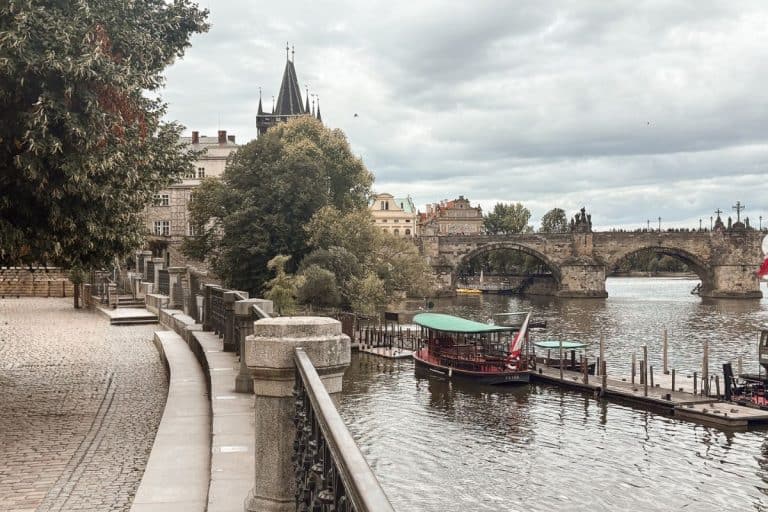
The Czech Republic is a country that feels straight out of a storybook, with cobblestone streets, historic castles, and charming old towns. From lively Prague to quiet countryside villages, it’s a place that blends history, culture, and everyday beauty effortlessly.

Mikulov

Karlovy Vary
Language:
The official language of the Czech Republic is Czech, but English is widely spoken.
Currency:
The official currency of the Czech Republic is the Czech koruna (crown).
Weather:
The Czech Republic has a mild continental climate with cold winters, warm summers, and pleasantly mild spring and autumn seasons.
Electricity:
The standard voltage is 230 volts (V) at a frequency of 50 hertz (Hz). For items that are single voltage, you might need a converter if it doesn’t match the voltage in Czechia. If you have a duel voltage device, you might not need it. Czechia uses type C and type E plugs and sockets. We recommend purchasing a universal adapter.
ATMs/Credit Cards:
You’ll find ATMs available in all the major tourist areas. Credit cards are widely accepted by restaurants and shops. There are some businesses that don’t accept credit cards so be sure to have some koruna on-hand.
Tipping:
Though not mandatory, many people do tip in Czechia to show their appreciation for excellent service.

At a Glance
Our Experience In Czechia
Every traveler should visit the Czech Republic at least once.
We spent hours exploring Prague’s Old Town and the cobblestone lanes of Mala Strana, stopping at beer gardens and breweries along the way to sample and compare our favorites. It really is a beer lover’s paradise
If beer isn’t your thing, you can also find a great selection of exceptional local wines on most menus as well.
While Prague was incredible, we fell in love with the Czech countryside, especially charming towns like Karlovy Vary and Mikulov.
Each town had its own unique character, and with fewer crowds, exploring felt relaxed and more enjoyable.
Our biggest tip? Don’t limit your trip to Prague. The Czech Republic has so much more to offer once you venture beyond the capital.
Why You Should Visit
Czechia As A Vacation Destination
The Czech Republic is located in central Europe and is known mostly for its capital city, Prague.
It’s a landlocked country whose neighbors include Germany, Poland, Austria, Slovakia and Hungary.
Its size and proximity to the other countries means you can visit multiple countries with relative ease in a short amount of time.
However, there’s more than enough to see and do in the Czech Republic alone to fill your vacation days.
Whether you’re wandering Prague’s cobblestone lanes, relaxing in the spa town of Karlovy Vary or sipping wine at a vineyard in Moravia, it’s easy to fall in love with the Czech Republic.


Know Before You Go
Best Time To Visit
Because the Czech Republic is landlocked, it’s not about beaches or summer sports.
This makes it an appealing destination any time of year for history, culture, and picturesque towns.
Some of the best times to visit are in the shoulder seasons from April to Many and September to October. There are usually fewer crowds and lower prices for flights and hotels.
For the warmest weather, plan your visit between June and early September. This is ideal for evening strolls through Old Town and Mala Strana.
For a festive atmosphere, plan your trip around the holidays and experience the charm of Prague’s Christmas market.
This takes place between the end of November and the first few days of January.
Whenever you decide to visit, you’ll be happy you did!
Weather In Czechia
Average Temperature & Rain
Temperatures in the Czech Republic range from cold, snowy winters to pleasantly warm summers.
Typically, the southern part of the country experiences milder weather than other areas.
Rainfall is steady year-round and slightly higher in late spring and summer.
|
MONTH |
AVERAGE |
AVERAGE |
|---|---|---|
|
JANUARY |
-3 °C (27 °F) to 2 °C (36 °F) |
24 mm (0.9 inches) |
|
FEBRUARY |
-2 °C (28 °F) to 4 °C (39 °F) |
23 mm (0.9 inches) |
|
MARCH |
1 °C (34 °F) to 9 °C (48 °F) |
28 mm (1.1 inches) |
|
APRIL |
4 °C (39 °F) to 14 °C (57 °F) |
38 mm (1.5 inches) |
|
MAY |
8 °C (46 °F) to 19 °C (66 °F) |
77 mm (3.0 inches) |
|
JUNE |
11 °C (52 °F) to 22 °C (72 °F) |
73 mm (2.9 inches) |
|
JULY |
13 °C (55 °F) to 24 °C (75 °F) |
69 mm (2.7 inches) |
|
AUGUST |
12 °C (54 °F) to 24 °C (75 °F) |
66 mm (2.6 inches) |
|
SEPTEMBER |
9 °C (48 °F) to 19 °C (66 °F) |
40 mm (1.6 inches) |
|
OCTOBER |
5 °C (41 °F) to 13 °C (55 °F) |
31 mm (1.2 inches) |
|
NOVEMBER |
1 °C (34 °F) to 6 °C (43 °F) |
32 mm (1.3 inches) |
|
DECEMBER |
-2 °C (28 °F) to 3 °C (37 °F) |
25 mm (1.0 inches) |